
A brush that is nearly the right size can still cause production problems. A roller brush with the wrong core fit may slip or run out of true. A strip brush with unsuitable filament can wear quickly, fail to seal, or mark the product. Made to spec Industrial brush manufacturing addresses these issues by building the brush around the machine, material, operating environment, and required result – not around a generic catalog dimension.
For plant managers, maintenance teams, OEMs, and procurement departments, the objective is practical: install a brush that fits correctly, performs consistently, and supports production continuity. Whether the application involves CNC punch press brush panels, conveyor cleaning, surface finishing, dust control, packaging, or food processing, the specification determines how well the brush will work in service.
What Made to Spec Industrial Brush Manufacturing Means for Production
Made to spec brush manufacturing is the process of engineering and producing an industrial brush to defined dimensions, materials, mounting requirements, and performance conditions. The finished brush may be a direct replacement for an existing part or a new design for machinery under development.
A proper specification goes beyond outside diameter and overall length. It accounts for the core or backing material, filament type and diameter, trim length, density, brush pattern, shaft configuration, rotation speed, contact pressure, exposure to heat or chemicals, and the surface being processed. These details affect cleaning force, wear rate, product protection, and machine compatibility.
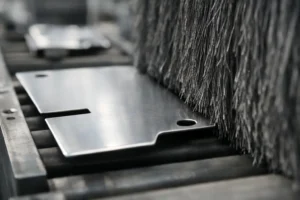
This approach is especially valuable when standard brushes create recurring issues. A standard roller brush may leave residue on a conveyor, for example, while a custom-engineered version with the correct filament stiffness and helix pattern can improve contact across the working width. Likewise, a correctly fitted brush table panel can protect sheet metal during CNC punching while allowing smooth material movement through the machine.
Start With the Application, Not the Brush Type
The first question should not be, “What brush do we need?” It should be, “What must the brush accomplish on this equipment?” Industrial brushes serve very different functions, including cleaning, guiding, sealing, deburring, polishing, supporting, transporting, wiping, and protecting surfaces.
A cleaning brush for steel scale and an abrasive nylon brush for surface preparation may look similar at a distance, but they require different filaments, densities, and operating pressures. A brush used to seal a loading dock door needs flexibility and weather resistance. A brush used on glass, painted metal, or polished components must remove debris without scratching the finished surface.
The operating environment also changes the design. Food processing equipment may require materials selected for washdown conditions and contamination control. High-temperature processes may need heat-resistant filaments and cores. In a dusty fabrication environment, a strip brush may need to maintain a consistent seal while resisting abrasion from airborne particles.
When the function is clear, the brush design can be matched to the actual production requirement rather than selected by appearance alone.
Key Machine Dimensions and Mounting Details
Accurate dimensions are the foundation of a replacement or custom brush. For cylindrical and roller brushes, measurements commonly include face length, outside diameter, core diameter, shaft diameter, bore dimensions, keyways, end caps, bearing locations, and drive-side configuration. A few thousandths of an inch can matter when a brush runs between fixed machine components.
For strip brushes, the required channel style, backing width, trim length, overall length, and mounting method must be defined. Brush panels and brush tables require the panel dimensions, brush layout, support requirements, and compatibility with the specific equipment model.
When replacing a worn part, photos, drawings, sample pieces, and machine information help verify the design. If the original brush is no longer performing as intended, copying it exactly may not be the best path. The replacement can be adjusted to correct premature wear, insufficient cleaning, excessive product marking, or poor fit.
Filament selection determines performance
Filament selection is one of the most important decisions in made to spec brush manufacturing. The right material balances stiffness, flexibility, abrasion resistance, heat tolerance, chemical resistance, and surface protection.
Nylon is commonly used for durable general-purpose cleaning, while abrasive nylon can provide controlled deburring, finishing, and surface conditioning. Polypropylene is often selected for applications requiring good chemical resistance and moisture tolerance. Tampico, horsehair, and other natural fibers may suit delicate cleaning or specialized finishing requirements. Steel, stainless steel, brass, and other wire filaments are used where more aggressive action is required.
Filament diameter and trim length matter as much as filament type. Thicker, shorter filaments create a more aggressive brush action. Finer or longer filaments are generally more flexible and conform better to uneven surfaces. More density can increase contact and cleaning action, but it can also increase drag, heat, and load on the machine. The correct balance depends on the material being processed and the equipment’s operating limits.
Brush Construction Must Match Production Conditions
Industrial brushes operate under real constraints: cycle times, line speeds, changing loads, contamination, vibration, operator handling, and maintenance intervals. A made-to-spec brush should be designed for these conditions from the beginning.
Core selection is a good example. Steel cores may be appropriate for demanding roller brush applications, while aluminum, stainless steel, plastic, wood, or composite materials can be better suited to specific weight, corrosion, sanitation, or cost requirements. In wet or corrosive environments, selecting an unsuitable core can shorten the service life of the brush even when the filament itself is correct.
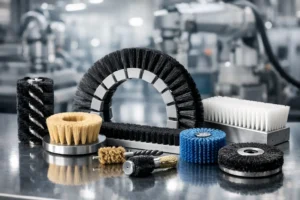
Brush fill pattern also matters. Straight rows, staggered patterns, spirals, and herringbone configurations can alter how material moves, how debris exits the contact area, and how evenly the brush wears. A spiral-wound roller brush may help move debris toward an edge, while a dense straight pattern may be better for uniform wiping or support.
For rotating brushes, speed and direction should be included in the specification. Counter-rotation, line speed, and contact force affect brush aggression and heat generation. A design that performs well in a slow cleaning station may wear too quickly on a high-speed production line.
Common Applications for Made to Spec Industrial Brushes
Custom brush manufacturing supports a broad range of equipment and production tasks. Brush tables and brush panels are frequently used on CNC punch presses and sheet metal processing equipment to support material, reduce scratching, and improve part handling. Replacement panels must fit the machine accurately and provide the right surface support for the material being processed.
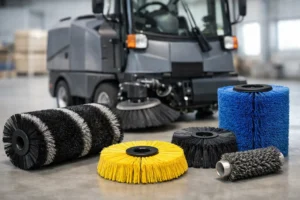
Cylindrical and roller brushes are used for conveyor cleaning, washing, dust removal, coating preparation, surface treatment, and material transport. Strip brushes are commonly installed for sealing, guarding, wiping, dust control, and conveyor edge protection. Wheel brushes and twisted brushes are used for deburring, cleaning internal areas, and preparing complex parts.
The application may call for a direct replacement, but OEMs often need a brush designed into new machinery. In that case, the brush manufacturer should work from the equipment drawings, required duty cycle, safety constraints, and expected maintenance plan. Early design input can prevent a brush from becoming a recurring field-service problem after the machine is installed.
What to Provide When Requesting a Custom Quote
A complete quote request reduces back-and-forth and speeds up production. Provide the brush type and intended function, along with dimensions, machine make and model, operating conditions, and photos or drawings when available. For replacement brushes, include part numbers and a sample if possible.
It is also helpful to describe the material contacting the brush, line speed or RPM, temperature, moisture, chemicals, and the problem with the existing brush. Is the brush wearing too fast? Is it leaving debris, failing to seal, marking product, or creating too much drag? Those details help identify whether the issue is material selection, brush density, trim length, mounting, or another design factor.
For CNC punch press brush panels, identify the machine manufacturer and model, such as Amada, TRUMPF, Salvagnini, Prima Power, Murata, Finn-Power, LVD, or Strippit, along with panel dimensions and the material being processed. Compatibility should be confirmed before manufacturing begins.
Why Lead Times & USMCA Nearshore Manufacturing Matter
A brush is often ordered because the current one has already reached the end of its usable life. That makes lead time more than a purchasing detail. It can affect maintenance scheduling, line availability, and whether a plant uses a temporary workaround that compromises quality.
Nearshore manufacturing can support U.S. manufacturers with practical lead times and responsive communication, particularly for operations in Texas, Illinois, Ohio, Michigan, and other production-heavy regions. Still, speed should not mean skipping specification review. A fast brush that does not fit or fails prematurely creates a second downtime event.
Cepillos Regios manufactures custom-engineered industrial brush solutions designed for durability, fit, and performance. The process begins with the machine and the application, then matches the right construction to the production requirement.
Frequently Asked Questions
Can a custom brush be made from an existing sample?
Yes. A worn or intact sample can provide valuable information about dimensions, mounting, core construction, and brush pattern. It should also be evaluated against the current application, because a repeated failure may indicate that the original design needs adjustment.
Are custom brushes only for large production runs?
No. Custom requirements often arise from a replacement need, a unique machine configuration, or a specific maintenance problem. Order quantity depends on the brush design, manufacturing process, and the customer’s stocking strategy.
How often should industrial brushes be replaced?
Replacement intervals depend on material, speed, pressure, contamination, operating hours, and acceptable product-quality standards. Replace brushes when they no longer clean, seal, support, finish, or protect as required – not only when they appear fully worn.
Need a custom industrial brush solution for production equipment? Request a custom quote based on your machine, dimensions, material, and application. The right specification helps maintenance teams replace a worn component with confidence and gives production lines a better chance of staying on schedule.