
A replacement brush that is close enough on paper can still create real problems on the machine. Premature wear, poor cleaning, inconsistent sealing, marking on finished parts, and unnecessary downtime often come back to one issue – the brush was reordered without enough technical detail. If you are figuring out how to specify replacement brushes, the goal is not simply to match a part number. The goal is to match the operating conditions, machine interface, and performance requirements that made the original brush work, or to improve on them if the original was underperforming.
For maintenance teams, procurement managers, and OEM buyers, that means looking beyond brush type alone. A strip brush, roller brush, wheel brush, or brush table panel may appear straightforward, but fit and function depend on dimensions, fill material, density, trim, shaft details, and the environment where the brush runs. Good specifications reduce guesswork and help a manufacturer deliver a brush designed for durability, fit, and performance.
How to specify replacement brushes without guesswork
The fastest way to create delays is to request a replacement with only a general description such as nylon roller brush or metal strip brush. That may be enough to start a conversation, but it is rarely enough to manufacture a reliable replacement. In industrial applications, small dimensional differences can affect contact pressure, part handling, cleaning quality, and machine wear.
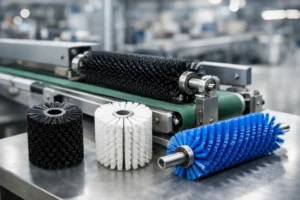
Start with the basic brush style and mounting method. Is it a cylindrical brush, a shaft-mounted roller brush, a wheel brush, a strip brush in a holder, a twisted brush, or a brush panel for a machine table? Knowing the form is the starting point, but it is only one part of the specification. The manufacturer also needs to understand how the brush interfaces with the equipment and what job it performs.
Application matters just as much as geometry. A brush used to support sheet metal on a CNC punch table needs different characteristics than a brush used for dust sealing on enclosure doors, edge deburring on fabricated parts, conveyor product guidance, or surface cleaning in food processing. The same brush format can be built in different materials and densities depending on speed, contact force, exposure to chemicals, abrasion, temperature, or moisture.
The core information every replacement brush quote should include
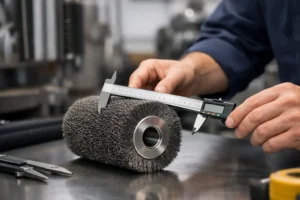
If you want an accurate quote and a replacement that performs correctly, provide dimensions first. For cylindrical and roller brushes, that usually means outside diameter, core diameter, face length, overall length, shaft diameter, bore size, keyway details, and rotation direction if it matters. For strip brushes, include backing width and height, filament trim length, overall strip length, and whether the brush fits a standard holder or a custom channel. For brush panels or brush tables, include panel length, width, thickness, hole pattern, brush layout, and machine make and model.
Photos help, but photos should support measurements rather than replace them. A clear image of the full brush, mounting points, wear pattern, and machine location can answer practical questions that dimensions alone may miss. If the original brush has a label, stamped number, or OEM reference, include that as well. Even when a custom redesign is needed, that information can speed up identification.
Material specification is where many replacement orders fall short. Buyers often know they need nylon, polypropylene, steel wire, stainless steel wire, Tampico, or an abrasive filament, but not the grade, diameter, or blend. Those details matter. A softer filament may protect sensitive surfaces but wear faster. A more aggressive abrasive nylon may improve deburring but can change the finish on the part. Stainless steel may be required for corrosion resistance, while carbon steel may be acceptable for dry, heavy-duty applications at lower cost.
Trim length and fill density are equally important. A longer trim can increase flexibility, while a shorter trim generally gives a stiffer brushing action. Higher density may improve coverage and sealing, but it also increases drag and can affect motor load or part contact. This is where replacement brush design becomes application-specific rather than catalog-based.
Match the brush to the operating conditions
When teams ask how to specify replacement brushes correctly, the missing piece is often the environment. A brush running in heat, moisture, oil mist, abrasive dust, or food contact conditions should not be specified the same way as a brush in a dry, light-duty station.
Machine speed matters because filament behavior changes at higher RPM. A brush that performs well at moderate speed may deform, wear unevenly, or generate excess heat at higher surface speeds. Contact pressure matters too. If the brush is set too aggressively against the workpiece or sealing surface, filament breakage and core stress can increase. If contact is too light, the brush may fail to clean, guide, or seal effectively.
The product being handled also affects specification. Sheet metal, glass, wood panels, printed materials, packaged goods, and food products all interact differently with brush surfaces. In some applications, marking or contamination is unacceptable, so filament choice and cleanliness become critical. In others, the main concern is abrasion resistance and service life.
If the existing brush failed early, mention how it failed. Did the filaments wear too quickly, bend over, melt, shed, or become chemically degraded? Did the core loosen, the strip backing deform, or the brush no longer maintain contact? Those details help determine whether the issue was material selection, machine setup, or simply normal wear.
How to specify replacement brushes for common industrial applications
For brush table panels and brush supports on turret punch presses or sheet processing equipment, machine model and panel layout are essential. The panel has to fit the table precisely, and filament height must support the sheet properly without interfering with feeding, nesting, or part quality. If the current setup is scratching material or allowing poor sheet movement, that should be part of the quote request.
For roller brushes used in cleaning, conveying, washing, or surface treatment, the shaft and core details deserve close attention. Even a small difference in bore tolerance, keyway dimensions, or overall face length can create installation problems. In these cases, a measured drawing or a sample core can save time.
For strip brushes used in sealing and dust control, the holder configuration matters as much as the brush itself. A standard channel-fit strip brush may be simple to replace, but custom bends, mitered corners, or drilled mounting patterns should be documented clearly. If the brush is intended to block dust, air, light, or debris, note the gap it must seal and whether low friction is required against moving surfaces.
For abrasive nylon brushes used in deburring, edge radiusing, or surface finishing, include the abrasive type, grit, part material, and desired finish. A replacement that is too aggressive can change dimensions or surface appearance. One that is too mild may not remove burrs consistently.
When an exact replacement is not the best replacement
There are times when copying the old brush exactly is not the right decision. Many replacement orders start because the original brush wore out too quickly, damaged product surfaces, trapped debris, or failed under current production speeds. In those cases, matching the old design may only repeat the same problem.
This is where an experienced industrial brush manufacturer adds value. Instead of treating the order as a simple reorder, they review the machine, dimensions, material, and application to see whether a change in filament, trim, density, backing, or core design would improve service life and performance. For U.S. manufacturers under pressure to limit downtime, that design support can be more valuable than the brush itself.
A nearshore manufacturing partner can also help when lead time matters. If a plant in Texas, Ohio, Illinois, or Michigan is trying to avoid a line stoppage, waiting on a vague quote request only adds friction. Clear specifications make the quoting process faster, and they reduce the risk of receiving a brush that needs rework or cannot be installed.
A practical checklist for buyers and maintenance teams
Before requesting a quote, gather the machine make and model, brush type, exact dimensions, mounting details, filament material if known, operating environment, application, wear issue, and photos. If available, include a sample brush, drawing, or OEM part reference. That information gives the manufacturer enough context to recommend either a true replacement or a better-fit alternative.
If you do not know every detail, that should not stop the process. Many buyers have a worn sample and a production problem, not a complete print. What matters is providing the best available measurements and explaining what the brush needs to do. A qualified supplier of custom-engineered industrial brush solutions can work from that starting point and help close the gaps.
For manufacturers and maintenance teams, knowing how to specify replacement brushes is really about protecting uptime. The more clearly you define fit, material, and application, the easier it is to get a brush manufactured for demanding industrial applications rather than a part that only looks similar. If you need replacement and custom brush solutions for production equipment, Cepillos Regios can review your machine, dimensions, material, and application and help you request a custom quote based on the brush you actually need.