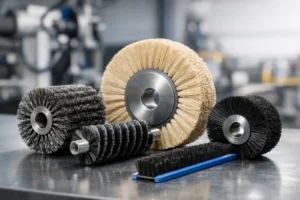

When a brush wears out on a production line, the problem is rarely just the brush. Parts start to mark, dust control gets worse, cleaning becomes inconsistent, and operators begin compensating for a component that no longer matches the machine. That is why choosing the right replacement brushes for machinery is a maintenance decision with direct impact on uptime, product quality, and equipment protection.
In industrial settings, brushes do real work. They guide sheet metal, seal out debris, clean conveyors, finish surfaces, control static, support delicate parts, and protect products as they move through equipment. A replacement that looks close enough on paper can still fail in service if the core, trim length, filament, density, or mounting style is off by even a small margin.
Why replacement brushes for machinery need exact fit
A brush is not a generic consumable in most plants. It is part of the machine system. If the outside diameter is wrong on a roller brush, contact pressure changes. If filament is too stiff on a brush table, finished parts can scratch. If a strip brush used for sealing has the wrong backing size or fill density, dust and contaminants get through.
This is where many sourcing problems begin. Buyers are often under pressure to replace a worn part fast, especially in plants across Texas, Illinois, Ohio, and Michigan where downtime can affect multiple shifts and tight delivery schedules. But speed should not come at the expense of fit. A brush that installs quickly but wears early or performs poorly usually creates a second shutdown.
For that reason, the best replacement process starts with the actual machine conditions, not just the name of the brush type. The application matters as much as the dimensions.
What to evaluate before ordering replacement brushes for machinery
The first question is simple – what is the brush doing inside the machine?
A brush used for sweeping debris has very different requirements than one used for part support, edge wiping, sealing, or abrasive finishing. Even within the same facility, two cylindrical brushes may need completely different filament materials because one handles dry dust and the other works in a wet, chemical-exposed environment.
Machine dimensions and mounting details
Start with the measurable basics. Buyers should confirm overall length, outside diameter, inner diameter, shaft size, channel size, mounting hole pattern, trim length, and fill configuration. On brush panels and brush tables, panel dimensions and machine model compatibility are critical. On strip brushes, backing style and holder dimensions matter just as much as filament choice.
If the existing brush has worn unevenly, measuring a used part can be misleading. In those cases, machine drawings, OEM references, or photos of the installed brush can help avoid ordering to a worn condition instead of the original specification.
Filament material and operating environment
Material selection affects performance, wear rate, and product protection. Nylon is common for many cleaning and transport applications because it offers good flexibility and wear resistance. Polypropylene works well where moisture or chemical resistance is needed. Natural fiber may fit specific light-duty uses, while wire filaments are used for more aggressive cleaning, deburring, or surface treatment.
There is always a trade-off. A stiffer filament may clean more aggressively, but it can also increase part marking or accelerate wear on sensitive surfaces. A softer filament may protect the product better, but it may not hold up under heat, abrasion, or continuous duty. The right answer depends on the material being processed, line speed, contact pressure, and exposure to moisture, heat, dust, oils, or chemicals.
Duty cycle and wear expectations
A brush running one shift a day in a light packaging environment will not wear the same way as a brush operating continuously in steel processing or metal fabrication. Duty cycle should shape the replacement specification.
This is one area where custom-engineered industrial brush solutions often outperform off-the-shelf substitutions. A higher filament density, different core material, or adjusted trim length can increase service life and improve consistency between maintenance intervals. That matters to plants trying to move from reactive replacement to planned maintenance.
Common machinery applications and what changes the spec
Brushes are used across a wide range of industrial systems, and each use case changes what buyers should prioritize.
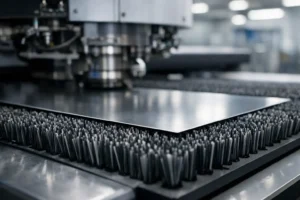
In CNC punch press and sheet metal processing equipment, brush tables and brush panels must support parts without scratching finished surfaces. Here, bristle height consistency, density, and panel fit directly affect part handling and sheet movement. A panel that sits unevenly or wears too fast can lead to quality issues that show up downstream.
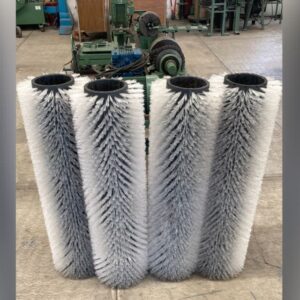
In conveyor systems, roller brushes and cylindrical brushes may clean, guide, separate, or stabilize products. These applications depend heavily on correct rotation, core balance, and filament resilience. A replacement that is slightly out of tolerance can cause vibration, poor contact, or irregular cleaning.
For sealing and dust control, strip brushes are often installed around machine openings, enclosures, and moving components. The challenge is balancing flexibility with barrier performance. If the filament is too soft or too sparse, contaminants pass through. If it is too dense or too stiff, drag increases and moving parts may not operate as intended.
Abrasive nylon brushes used for deburring, edge radiusing, or surface preparation bring another layer of complexity. Grit type, grit size, filament diameter, and rotational speed all affect the finish. In these cases, a replacement brush is not simply a dimensional match. It must also reproduce the process result.
OEM part or custom replacement?
For many buyers, this is the practical question. If the OEM part is available, it may seem like the safest route. In some cases, it is. But OEM sourcing is not always the best fit for lead time, cost control, or application improvement.
A custom replacement can make sense when the original brush wears too quickly, causes part marking, is difficult to source, or no longer matches current production conditions. Plants often change materials, speeds, or throughput over time. The brush should evolve with the process.
That is why working with a manufacturer that understands replacement and custom brush solutions for production equipment can be more valuable than simply reordering by part number. A design-first review may reveal that the issue is not just replacement, but optimization.
What to provide when requesting a quote
The fastest way to get an accurate brush recommendation is to provide more than a product name. A useful RFQ should include the machine make and model, brush dimensions, photos, application details, operating environment, material being processed, and any known pain points such as premature wear, surface marking, dust leakage, or inconsistent cleaning.
If available, samples of the worn brush are helpful. So are drawings and production notes. For OEMs and maintenance teams managing recurring replacements across multiple machines, standardizing this information can shorten future quote cycles and reduce sourcing errors.
A qualified supplier should be able to review these details and recommend a brush designed for durability, fit, and performance rather than just a visual match.
How a reliable supplier reduces downtime
Industrial buyers are not just purchasing brush components. They are evaluating whether a supplier can support production continuity. That means consistent manufacturing quality, responsive quoting, practical lead times, and the ability to manufacture to exact dimensions.
For U.S. manufacturers, nearshore production can be an advantage when replacement timing is tight. It can reduce supply chain delays and make it easier to support both standard and custom orders. That is especially useful for plants that cannot afford long waits for imported replacement parts or need direct communication on technical specifications.
An experienced manufacturer should also understand where failure tends to occur. Sometimes it is filament wear. Sometimes it is hub damage, core corrosion, poor balance, or an installation mismatch. The more the supplier understands the real operating conditions, the more likely the replacement will solve the problem the first time.
Cepillos Regios works with U.S. manufacturers and industrial operators that need custom-engineered industrial brush solutions manufactured for demanding industrial applications. That includes replacement and made-to-spec brushes for machinery where fit, durability, and lead time all matter.
FAQs about replacement brushes for machinery
How do I know if I need an exact duplicate or a modified brush?
If the original brush performed well and delivered acceptable service life, an exact duplicate is usually the right starting point. If the brush wore too quickly, marked parts, or failed under current production demands, a modified design may be the better choice.
Can a worn brush be matched without a drawing?
Usually, yes. Photos, physical samples, machine model information, and key dimensions are often enough to develop a replacement specification. The more application details you provide, the better the match.
What is the most common mistake when ordering a replacement brush?
Focusing only on dimensions. Size matters, but so do filament material, density, trim length, core construction, and the actual job the brush performs inside the machine.
Are custom brushes only for unusual equipment?
No. Custom brushes are often used for standard production equipment when buyers need a better fit, improved wear life, or compatibility with a specific material, environment, or process.
If a brush affects cleaning, sealing, part support, surface finish, or debris control, it deserves the same level of specification as any other wear component in the machine. The right replacement is not just about filling an open part number. It is about keeping the line running the way it should, shift after shift.