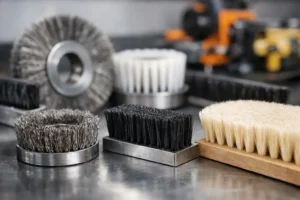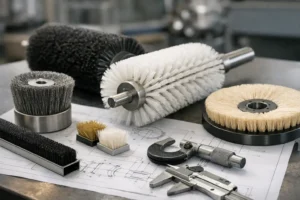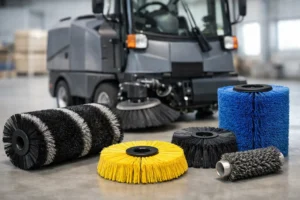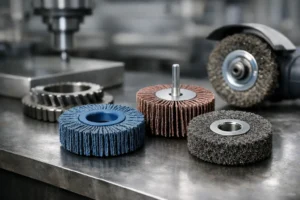

A worn brush panel on a CNC punch press, an undersized strip brush on a packaging line, or a roller brush with the wrong filament can create a production problem well beyond the cost of the part itself. When a replacement is needed, the sourcing decision affects downtime, machine protection, inspection requirements, and the ability to correct a design issue quickly. That is why nearshore vs overseas brush sourcing should be evaluated as an operating decision, not simply a unit-price comparison.
For U.S. manufacturers, the right option depends on brush complexity, order volume, application risk, inventory strategy, and how much technical support is required before production begins. Overseas sourcing can suit stable, high-volume parts with long planning windows. Nearshore manufacturing often provides a stronger fit when dimensions, materials, and lead times must be closely managed.
Nearshore vs Overseas Brush Sourcing for Industrial Buyers
The difference between nearshore and overseas sourcing is not only geographic distance. It changes how a supplier communicates, responds to specification changes, controls production, and supports replacement needs.
Overseas brush sourcing usually refers to purchasing from suppliers located across major ocean freight routes, often with longer transportation times and more handoffs between the factory and the U.S. facility. Nearshore sourcing places manufacturing closer to the U.S. market, typically in Mexico or neighboring regions, making ground freight, direct communication, and shorter replenishment cycles more practical.
For a standard catalog brush with fixed dimensions and predictable annual demand, a lower quoted unit price from an overseas supplier may justify a longer purchasing cycle. For a custom brush table, cylindrical brush, sealing strip, or abrasive nylon brush designed around a specific machine, the calculation changes. A mismatch in core diameter, bristle trim, backing material, density, or mounting pattern can delay installation and leave equipment unavailable.
Lead Time Is More Than Transit Time
Procurement teams often compare supplier lead times by asking when a finished brush will ship. That is necessary, but it does not capture the full time required to return equipment to service.
With overseas sourcing, the total timeline can include quotation revisions, sample approval, manufacturing, export handling, ocean transit, customs clearance, domestic freight, and receiving inspection. Each stage can be manageable on its own. Together, they create a longer exposure period when a part fails unexpectedly or a production schedule changes.
Nearshore manufacturing can reduce the distance between the drawing review and the delivered part. This is particularly valuable for U.S. plants in Texas, Illinois, Ohio, Michigan, Indiana, and Wisconsin, where replacement brushes may support equipment that cannot remain idle for weeks. Ground transportation also makes expedited shipments and smaller replenishment orders more realistic than they may be with ocean-based supply.
That does not mean nearshore supply is always immediate. Custom industrial brushes still require engineering review, material selection, manufacturing time, and quality checks. The advantage is that the supply chain generally has fewer extended transit stages and allows faster response if the specification needs correction.
When overseas lead times can work
Overseas sourcing can be appropriate when the brush design is proven, demand is stable, and the buyer carries enough safety stock to absorb delays. It is commonly more workable for high-volume components that do not need frequent engineering changes.
The risk rises when the plant has only one or two replacement units available, uses a nonstandard machine configuration, or needs a brush that affects finished-part quality. In those cases, a lower unit price may not offset the cost of a delayed restart, rushed freight, or emergency local replacement.
Custom Fit and Engineering Support
Industrial brushes are rarely interchangeable simply because they share a general product category. A roller brush may require a specific shaft bore, core material, balancing requirement, bristle pattern, and filament stiffness. A brush panel for a sheet metal machine must fit the machine bed, mounting system, workpiece load, and material-flow requirements. A sealing brush must control dust or debris without creating excessive drag.
The most useful supplier relationship begins with the application rather than the catalog number. Buyers should be prepared to provide dimensions, photographs, machine make and model, operating temperature, exposure to moisture or chemicals, surface being contacted, rotational speed when applicable, and the expected cleaning, sealing, guiding, finishing, or protection result.
Nearshore brush suppliers can be better positioned for iterative custom work because drawing questions, sample adjustments, and production feedback can move faster. Direct access to a technical team is especially useful when an existing brush is failing prematurely. The problem may involve more than the brush itself. Incorrect filament material, excessive pressure, improper trim length, poor mounting alignment, or the wrong abrasive level can all affect service life.
Overseas suppliers can also produce custom parts, particularly when specifications are complete and volumes justify formal tooling or development work. However, greater distance can make it harder to resolve ambiguity. If the supplier interprets a measurement differently, the correction cycle may be considerably longer.
Total Landed Cost Should Include Downtime Risk
Quoted price is visible. The operational cost of a delayed, incorrect, or inconsistent brush is often less visible until it reaches the plant floor.
A practical total-cost review should account for purchase price, freight, duties where applicable, brokerage, inventory carrying cost, inspection time, quality rejects, expedited shipping, and the potential cost of lost production. For a brush table supporting sheet metal handling, for example, damaged or poorly fitted panels can contribute to scratching, poor material support, or interruption at the machine. The cost is not limited to replacing the panel.
Nearshore sourcing may carry a higher piece price in some cases, but it can lower the cost of carrying large inventories and reduce the chance that a specification error remains unresolved for months. Smaller, more frequent orders may also help buyers avoid tying up capital in parts that could change after a machine modification.
Overseas sourcing may deliver better economics for a large annual purchase of identical brushes. It becomes less attractive when a buyer needs several custom variations, frequent replacements, or a quick response to unplanned maintenance.
Quality Control and Consistency
Brush quality is determined by measurable details: filament type, diameter, density, trim length, anchor method, core construction, adhesive selection, balance, tolerances, and final inspection. A brush that looks correct from a distance may still perform poorly if any of these details are outside the application requirement.
For critical applications, specify what acceptance means before ordering. This can include dimensional tolerances, required materials, rotation direction, mounting details, filament arrangement, allowable runout, and packaging requirements. A retained sample or approved drawing helps establish a repeatable standard for future orders.
Nearshore manufacturing can make communication around inspections and corrective actions more direct. It may also enable faster sample delivery before a larger order is released. That is useful for OEMs and maintenance teams validating a replacement brush on operating equipment.
Overseas sourcing requires equally disciplined specifications, but buyers should allow additional time for sample approval, inspection coordination, and corrective production. A supplier should not be selected on price alone when brush performance affects food-processing cleanliness, automotive surface quality, metal finishing, dust control, or production equipment protection.
Nearshore vs Overseas Brush Sourcing Comparison
| Evaluation Factor | Nearshore Sourcing | Overseas Sourcing |
| Typical Lead Times | 1–3 Weeks (Ground Trucking / LTL) | 8–14+ Weeks (Ocean Freight + Customs) |
| Trade & Duties | USMCA Duty-Free / Low Tariffs | Subject to Section 301 Tariffs / Ocean Surcharges |
| Engineering Response | Same Time-Zone Communication | 12+ Hour Time-Zone Delay |
| Best Used For | Custom CNC panels, low-volume, critical maintenance | High-volume standard catalog components |
| TCO Impact | Lower inventory holding cost & zero downtime risk | Lowest piece price, higher buffer stock requirement |
Choosing the Right Sourcing Model
The most effective sourcing strategy is often not an either-or decision. Many industrial buyers use overseas supply for predictable, high-volume standard parts while maintaining a nearshore source for custom, urgent, and production-critical brushes.
Consider nearshore manufacturing when a brush must be made to exact machine dimensions, the application is demanding, replacement timing is critical, or the design may need refinement. It is also a practical option when a plant wants shorter replenishment cycles and direct support from a manufacturer that understands industrial operating conditions.
Consider overseas sourcing when the part is stable, well documented, ordered in substantial volume, and supported by enough inventory to cover extended lead times. The buyer should still verify quality systems, material consistency, packaging, and the true delivered cost.
For custom-engineered industrial brush solutions, Cepillos Regios works from the machine, dimensions, material, and application requirements rather than treating every replacement as a standard item. That approach helps determine whether a cylindrical brush, brush panel, strip brush, wheel brush, twisted brush, or abrasive nylon brush is designed for durability, fit, and performance.
Questions Buyers Ask About Brush Sourcing
Is nearshore sourcing always more expensive?
Not necessarily. The piece price may be higher than an overseas quote, but shorter freight routes, lower inventory needs, fewer expedited shipments, and reduced downtime exposure can change the total cost. The answer depends on order size, part complexity, and how costly a supply interruption would be.
What should be included in a custom brush quote request?
Provide the brush type, complete dimensions, core or backing requirements, filament material if known, machine make and model, operating conditions, quantity, photos of the existing part, and the specific result needed from the brush. If the existing brush is failing, explain how it is failing and how long it lasts in service.
Can a nearshore supplier replace an overseas-made brush?
In many cases, yes. A qualified manufacturer can work from a sample, drawing, measurements, or machine requirements to develop a replacement and, where needed, improve the design for the actual application. Compatibility must be verified before production.
A sourcing decision should protect production continuity, not merely reduce the purchase order total. If your operation needs a replacement or made-to-spec brush for manufacturing, cleaning, sealing, or surface-treatment needs, request a custom quote based on your machine, dimensions, material, and application.