
When a machine keeps marking parts, letting dust into an enclosure, or wearing through replacement brushes too quickly, the problem is often not the machine itself. It is the brush. Custom brush design for machines matters because brush performance depends on exact fit, filament selection, operating speed, contact pressure, and the environment around the equipment. A brush that is close enough on paper can still create downtime, poor finish quality, or premature wear on the line.
For plant managers, maintenance teams, OEMs, and procurement buyers, that distinction matters. A brush is not just a consumable. In many applications, it is a working component that protects surfaces, controls material movement, seals gaps, removes debris, or finishes a product. If the brush is underspecified, overbuilt, or simply mismatched to the machine, the cost shows up in scrap, maintenance hours, and lost production time.
Why custom brush design for machines is often the better choice
Standard brush sizes work well when the application is simple and the machine geometry is forgiving. But many industrial systems are not forgiving. CNC punch press tables, conveyor lines, packaging equipment, food processing machinery, steel handling systems, textile machines, and sealing stations all place different demands on the brush.
A custom-engineered industrial brush solution starts by looking at how the brush actually functions in the machine. Is it supporting sheet metal while minimizing surface marking? Is it sweeping dust from a moving belt? Is it sealing a door or guarding an opening from debris? Is it polishing, guiding, spacing, or cleaning? The answer changes the design.
That is where custom work reduces risk. Instead of forcing a catalog part into a machine, the brush is designed for durability, fit, and performance based on real operating conditions. In production environments, that usually leads to better consistency and fewer replacement issues.
What defines a good machine brush design
A good brush design is not just about matching dimensions. It is about balancing the brush core, filament type, trim length, density, stiffness, mounting method, and exposure to heat, chemicals, moisture, dust, abrasion, or continuous cycling.
Dimensions and machine compatibility
Fit is the first requirement. Length, outer diameter, inner diameter, shaft size, channel dimensions, hole spacing, mounting orientation, and brush face profile all have to match the equipment. Even a small dimensional error can cause vibration, uneven wear, poor contact, or installation delays.
For replacement and custom brush solutions for production equipment, buyers should expect the design process to start with exact machine measurements or an existing sample. In OEM applications, engineering drawings are often the best starting point. In maintenance replacement situations, photos, machine model information, worn part dimensions, and notes about the failure mode can be enough to begin.
Filament material selection
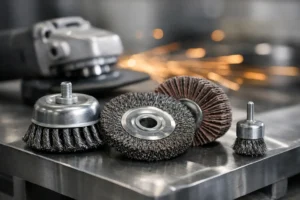
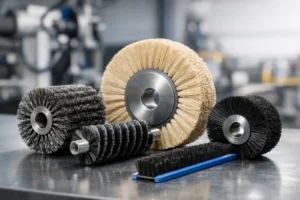
Material choice affects how the brush behaves more than many buyers expect. Nylon is common because it handles wear well and works across many manufacturing, cleaning, sealing, and surface-treatment needs. Polypropylene can perform well in wet environments or chemical exposure. Natural fiber may still fit some specialized finishing tasks. Wire filaments are used where aggressive cleaning, deburring, or scale removal is required.
Then there are abrasive nylon options, which are often used when the brush needs to do more than contact a surface. If the goal is light deburring, edge finishing, oxide removal, or controlled surface treatment, abrasive-filled filaments can be the better choice. But that depends on the substrate, feed rate, and desired finish. Too aggressive, and the brush can damage the part. Too soft, and the process does not achieve the result.
Fill density, stiffness, and trim length
These three variables work together. Higher fill density can improve contact consistency and sealing, but it can also increase drag. Shorter trim length usually makes the brush stiffer, while longer trim gives more flexibility and a softer touch. The right combination depends on whether the brush needs to sweep, support, polish, seal, or scrub.
This is one reason custom brush design for machines should be based on application details, not just part dimensions. A brush that fits perfectly but has the wrong filament stiffness may still fail in service.
Common industrial applications where custom design matters
In sheet metal fabrication, brush tables and brush panels protect finished surfaces while supporting material through punching and processing. If the brush height is inconsistent or the filament is too stiff, marking becomes a problem. If it is too soft or sparse, sheet support suffers and parts may tip or catch.
In conveyor and packaging systems, strip brushes and sealing brushes are often used to control dust, guide products, close gaps, or protect sensitive areas from contamination. Here, the design has to match line speed, product size variation, and mounting constraints. A standard strip brush may fit the opening, but still leave too much leakage or wear too quickly under constant contact.
In food processing and sanitation equipment, material compatibility becomes critical. The brush may need to resist washdown conditions, chemical cleaners, or moisture while maintaining reliable cleaning performance. In these environments, the wrong material can degrade early or create hygiene concerns.
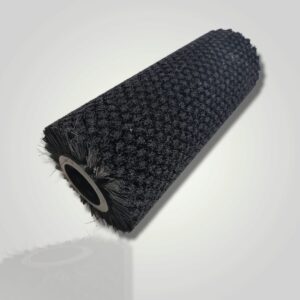
In steel, glass, wood, ceramics, and textile operations, the application can be more abrasive, hotter, or more sensitive to finish quality. Cylindrical brushes, roller brushes, wheel brushes, and twisted brushes may all require different construction methods depending on the machine speed and the surface being processed.
What buyers should provide for a custom quote
A useful quote starts with more than a part number. If a buyer wants a brush manufactured for demanding industrial applications, the supplier needs enough detail to match the brush to the job.
The most helpful information usually includes machine make and model, brush type, overall dimensions, core or channel details, filament material if known, application description, operating speed, contact surface, exposure to heat or chemicals, and photos of the existing brush and installation area. If the current brush is failing, it also helps to explain how. Is it wearing too fast, bending, shedding, marking the product, or not sealing correctly?
That kind of detail shortens the quoting cycle and improves first-pass accuracy. It also helps identify whether the issue is the brush itself or a larger machine condition such as misalignment, excessive pressure, or contamination buildup.
The trade-offs behind custom brush engineering
Custom does not always mean complex, and it does not always mean expensive. Sometimes the change is as simple as switching filament grade, adjusting trim length, or modifying the mounting pattern to match an older machine.
Still, there are trade-offs. A denser brush may last longer in one application but increase motor load in another. A softer filament may protect delicate surfaces better but require more frequent replacement. A highly specialized design may improve performance significantly, but if the plant does not keep a spare on hand, lead time planning becomes more important.
That is why the best industrial brush manufacturer acts as a technical partner, not just a fabricator. The goal is not to build the most complicated brush. It is to build the right brush for the machine, the workload, and the operating environment.
How custom brush design supports uptime
Most buyers do not start looking for a custom brush because they want engineering for its own sake. They start because a line is underperforming, a replacement part is no longer available, or a standard brush keeps creating recurring problems.
A properly specified brush helps stabilize the process. It can reduce part marking, improve cleaning consistency, contain dust more effectively, protect machine openings, and extend replacement intervals. That means fewer interruptions for maintenance teams and fewer surprises for purchasing departments trying to source parts under pressure.
For U.S. manufacturers, especially in production-heavy states like Texas, Illinois, Ohio, and Michigan, responsive supply also matters. Nearshore manufacturing can help reduce long wait times and make custom replacement support more practical when downtime is already costing the plant money.
Cepillos Regios approaches this work as a manufacturing partner by building custom-engineered industrial brush solutions around machine dimensions, operating conditions, and application demands rather than treating every brush like a standard commodity item.
When to replace a standard brush with a custom one
If a standard brush installs easily and performs consistently, there may be no reason to change. But if the same issue keeps coming back, it is time to revisit the design.
Repeated wear in one section, inconsistent contact across the width, product damage, poor sealing, unusual vibration, or frequent replacement cycles are all signs that the brush specification may not match the machine. The same is true when a line has been modified over time and the original replacement part no longer reflects the current setup.
In those cases, custom brush design for machines is less about customization for its own sake and more about correcting a mismatch that is already affecting production.
The practical next step is to request a custom quote based on your machine, dimensions, material, and application. The more clearly the operating conditions are defined, the more likely the brush will perform the way the line needs it to. A well-designed brush does not call attention to itself. It simply keeps the equipment running the way it should.