
A worn roller brush usually announces itself before it fails completely. Product finishes start looking inconsistent, debris stops clearing evenly, sealing pressure changes, or the machine begins compensating for brush wear in ways that affect throughput. In most plants, roller brush replacement is not just a maintenance task. It is a production decision tied directly to quality, uptime, and equipment protection.
The right replacement depends on more than matching diameter and length. Roller brushes are used in cleaning, guiding, washing, coating support, surface treatment, dust control, and material handling across industries like steel, food processing, packaging, wood, glass, and automotive manufacturing. A brush that looks similar to the original may still perform poorly if the filament, density, core construction, or mounting details are off by a small margin.
Why roller brush replacement affects more than brush life
In industrial settings, a roller brush wears gradually, but the production impact is rarely gradual. Once filament tips round off, stiffness changes, or the brush loses outside diameter, contact pressure can shift quickly. That can mean less effective cleaning, poor part handling, excess vibration, or unwanted marking on finished surfaces.
This is where replacement timing matters. Replace too early and you use up service life that still had value. Replace too late and the brush starts costing more than it saves through scrap, rework, line stoppages, or wear on nearby machine components. For maintenance teams and procurement managers, the practical goal is not simply to replace a brush when it looks bad. It is to replace it when performance starts moving outside acceptable process limits.
A good replacement plan also reduces emergency sourcing. Plants in Texas, Illinois, Michigan, Ohio, and other manufacturing-heavy regions often run equipment that cannot wait on a generic part that may or may not fit. When the replacement brush is built to the actual machine and application, installation is faster and restart risk is lower.
Signs it is time for roller brush replacement
Some brushes fail visibly. Others continue turning while process quality declines. In either case, operators usually see the warning signs first.
If the brush no longer contacts the surface evenly across the full face width, replacement should be evaluated. The same is true if filament breakage becomes noticeable, the brush begins leaving streaks or missed zones, or the machine requires repeated adjustment to maintain results. Core damage, shaft looseness, imbalance, heat distortion, and chemical attack are also common reasons to replace rather than keep adjusting around the problem.
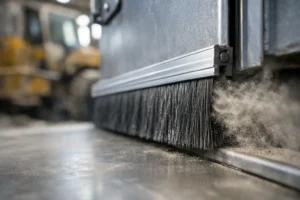
In abrasive or high-speed applications, brush diameter loss is one of the most important indicators. As outside diameter drops, the brush may no longer generate the intended contact force. In sealing and dust-control applications, even a small reduction in filament length can create gaps that allow contaminants through. In washing or conveyor-support roles, uneven wear can change material tracking and create handling problems upstream or downstream.
What to match during roller brush replacement
A proper roller brush replacement starts with the actual operating conditions, not just the old part number. That old brush may have been correct, or it may have been a compromise installed years ago because it was readily available.
Core dimensions and mounting details
The brush must match the core length, outside diameter, inside diameter, shaft size, bore details, keyways, journals, end caps, and overall mounting method. Even small errors here can create runout, difficult installation, or premature wear. On high-speed equipment, balance and concentricity matter as much as fit.
Fill material and filament characteristics
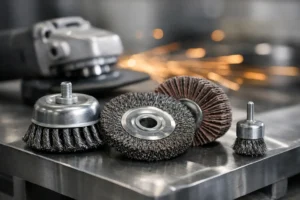
Nylon, polypropylene, natural fiber, wire, and abrasive nylon all behave differently. The correct material depends on heat, moisture, chemicals, surface sensitivity, and desired aggressiveness. For example, a food or washdown application may need a material with strong moisture and chemical resistance, while a metal-finishing line may require abrasive nylon for controlled surface action.
Filament diameter also changes performance. A thicker filament may last longer and provide more aggressive contact, but it can also mark delicate surfaces or require more drive power. A finer filament may improve finish quality, but it may wear faster under heavy debris load. There is no single best option. It depends on the line, the product, and the target result.
Brush density, trim length, and pattern
Density affects how the brush carries debris, how much pressure it applies, and how quickly it wears. Trim length influences flexibility and contact behavior. The fill pattern matters too, especially in applications where directional movement, liquid flow, or material guidance is part of the process.
This is why replacement based only on visual similarity can be risky. Two roller brushes can appear nearly identical and still perform very differently once installed.
Common causes of premature brush wear
If a brush is wearing out faster than expected, replacing it with the same design may repeat the same failure.
One common cause is excessive contact pressure. Plants sometimes compensate for reduced brush effectiveness by increasing pressure, which speeds wear and can overload bearings or motors. Another issue is using the wrong filament for the environment. Heat, chemicals, abrasion, or UV exposure can break down material faster than expected if the brush was not selected for those conditions.
Contamination also matters. Fine metal particles, abrasive dust, oils, and sticky residues can pack into the fill and change how the brush behaves. In some cases, cleaning frequency needs to change. In others, the brush design itself should be adjusted to release debris more effectively.
Speed mismatch is another frequent problem. A brush designed for moderate rotation may not hold up at higher RPMs, especially if core construction or fill retention is not suited to the application. If the brush is part of an OEM machine or custom line, replacement should account for actual operating speed, not just nominal design speed.
Custom vs. off-the-shelf replacement
For simple applications, a standard replacement may be sufficient. If the machine uses a common roller size and the process is forgiving, a catalog option can work.
But many industrial applications are not forgiving. OEM modifications, older equipment, line retrofits, and harsh operating conditions often require a custom-engineered industrial brush solution. This is especially true when the brush affects product finish, sealing effectiveness, cleaning consistency, or machine protection.
Custom roller brush replacement is often the better choice when you need an exact fit, a material change, improved durability, or a design adjustment to correct recurring wear issues. It also makes sense when lead time, repeatability, and technical support matter more than buying the closest available part.
For U.S. manufacturers and industrial operators, nearshore production can be a practical advantage. Faster communication, shorter lead times, and specification-driven manufacturing help reduce downtime and simplify repeat orders.
What to provide when requesting a replacement quote
The fastest way to get the right brush is to provide complete application data from the start. A sample brush is helpful, but it should not be the only reference.
The most useful information includes overall brush length, outside diameter, core diameter, shaft or bore dimensions, rotational speed, direction of rotation, operating environment, and the material being contacted. It also helps to describe the function clearly – whether the brush is cleaning, sweeping, guiding, sealing, washing, polishing, or supporting product movement.
Photos of the installed brush, the worn areas, and the machine mounting points can prevent mistakes. If the current brush is failing too fast or delivering inconsistent results, that should be noted as well. A replacement part is an opportunity to improve the design, not just duplicate a problem.
Manufacturers like Cepillos Regios that provide replacement and custom brush solutions for production equipment typically work best from dimensions, operating conditions, and application goals together. That approach leads to a brush designed for durability, fit, and performance rather than a simple visual match.
FAQs about roller brush replacement
How often should roller brushes be replaced?
There is no fixed schedule that fits every operation. Replacement intervals depend on speed, pressure, environment, debris type, filament material, and quality requirements. The best trigger is measurable performance decline, supported by routine inspection.
Can a worn brush be rebuilt instead of replaced?
Sometimes. If the core is structurally sound and the design supports refill or recovering, rebuilding may be possible. If the core is damaged, out of balance, corroded, or dimensionally compromised, a full replacement is usually the better long-term choice.
Is it worth changing brush material during replacement?
Yes, when wear patterns or process results show a mismatch. A material change can improve chemical resistance, reduce surface marking, increase cleaning action, or extend service life. The right choice depends on the actual application conditions.
What causes uneven wear across the brush face?
Uneven wear usually points to alignment issues, inconsistent contact pressure, tracking problems, runout, or uneven product loading. In some cases, the brush design itself needs to be adjusted to fit the process better.
A reliable roller brush replacement should restore more than motion. It should restore process control. When the brush is matched to the machine, the environment, and the job it performs, maintenance becomes more predictable and the line runs with fewer surprises. If your current brush is wearing out too fast, leaving inconsistent results, or forcing repeated adjustments, that is usually the right time to request a custom quote based on your machine, dimensions, material, and application.