
Dust, chips, powders, and light debris rarely stay where production teams want them. They migrate through door gaps, conveyor openings, machine guards, and moving interfaces, where they can affect product quality, cleaning time, sensors, and component life. Dust proof brush seals provide a practical barrier for these hard-to-seal areas, conforming to irregular surfaces while allowing equipment, material, or moving parts to pass.
For plant managers, maintenance teams, OEMs, and procurement departments, the goal is not simply to add a brush. The seal must fit the opening, tolerate the operating environment, and maintain contact without creating excessive drag. A poorly specified brush seal can wear prematurely, interfere with movement, or leave the same dust path open.
Where Dust Proof Brush Seals Solve Real Problems
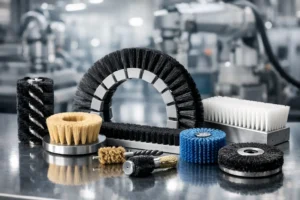
A brush seal is typically made from densely packed filaments held in a metal or polymer backing. Mounted along an edge or within a channel, the filaments form a flexible contact barrier. Unlike a rigid gasket, they can follow uneven surfaces, accommodate minor misalignment, and work around passing products or moving machine components.
This makes them useful where a fixed rubber seal would bind, tear, or prevent movement. Common applications include access doors on processing equipment, conveyor transfer points, packaging line enclosures, warehouse doors, cable and hose pass-throughs, machine guarding, and dust collection interfaces. They are also used around automated equipment where gaps cannot be eliminated because of travel, vibration, or product flow.
In metal fabrication, brush seals can help contain fines and cutting debris around enclosed stations. In food and packaging facilities, they may reduce the movement of dry ingredients, paper dust, and packaging scrap into adjacent areas. In wood, textile, ceramics, and glass operations, the correct brush configuration can limit airborne material at equipment openings without obstructing production.
A brush seal is not a replacement for properly designed extraction where large volumes of airborne dust are present. It works best as part of a broader containment strategy, reducing leakage at the gaps that ductwork, enclosures, and conventional gaskets cannot fully address.
Choosing the Right Dust Proof Brush Seals
The best design depends on the gap, movement, contaminant, and contact surface. A brush that performs well on a stationary cabinet door may fail quickly on a fast-moving conveyor or a heated processing enclosure. Before selecting materials, define what the seal must prevent, what must move through it, and how often that movement occurs.
Filament Material Sets the Operating Limits
Nylon is a common choice for general industrial sealing because it offers good wear resistance and flexibility. It is often suitable for dry dust, light debris, and standard indoor manufacturing conditions. Polypropylene can be useful where moisture resistance or chemical exposure matters, while polyester may be selected for particular temperature or environmental needs.
For elevated temperatures, static-control requirements, aggressive chemicals, or applications requiring conductivity, a standard synthetic filament may not be sufficient. Metal wire, conductive fibers, or specialty polymers can be considered, but each changes the seal’s stiffness, wear behavior, and contact characteristics.
Filament diameter matters as much as material. Fine filaments create a denser, more conformable barrier for powders and light dust. Heavier filaments offer greater durability and resistance to abrasion but can leave more open space between fibers and create higher drag. The practical choice is often a balance between containment and service life.
Density and Trim Length Control the Seal
A short, stiff brush may resist deformation and wear well, but it can struggle to maintain contact across an uneven surface. A longer trim offers more flexibility and reach, although excessive length can bend over, reduce sealing effectiveness, or create friction on a moving surface.
Dense packing improves dust control because it reduces pathways through the filament field. However, higher density can also increase resistance when a product, belt, or door moves through the seal. For high-cycle equipment, that resistance must be considered alongside motor load, product marking, and required operating speed.
The seal should have enough interference to contact the opposing surface consistently, not so much that the filaments remain heavily compressed. Permanent bending is a common cause of declining performance. When a seal is compressed beyond its working range, it may look intact while allowing dust to escape below or between flattened bristle sections.
Backing and Mounting Must Match the Machine
Strip brush seals are frequently supplied with metal channel backing for mounting in a retainer, bracket, or fabricated frame. Common backing options include galvanized steel, stainless steel, aluminum, and other materials chosen for corrosion resistance, weight, or compatibility with the assembly.
Mounting details determine whether replacement is simple or disruptive. A slide-in channel allows maintenance personnel to remove a worn seal without dismantling the surrounding equipment. A screw-mounted strip may be more appropriate for a fixed guard or custom enclosure. For OEM equipment, specifying the correct backing dimensions and mounting orientation from the start can prevent field modifications later.
Material Selection Quick-Matrix
| Filament Material | Temp. Range | Wear Resistance | Chemical / Moisture Resistance | Primary Industrial Application |
|---|---|---|---|---|
| Nylon (6 / 6.6) | Up to 230°F (110°C) | Excellent | Good / Fair | General industrial sealing, warehouse doors, conveyors |
| Polypropylene | Up to 180°F (82°C) | Good | Excellent (FDA options available) | Wet environments, chemical washdowns, food processing |
| Polyester (PBT) | Up to 275°F (135°C) | Very Good | Excellent UV / Moisture Resistance | Outdoor enclosures, high-humidity processing lines |
| Stainless Steel / Wire | Up to 600°F+ (315°C+) | Extreme | High Chemical & Heat Immunity | High-heat ovens, static-dissipative areas, heavy debris |
Design Around the Actual Operating Condition
Measurements taken from a stopped machine are useful, but they do not always reveal how the interface behaves in production. Doors may sag slightly when open, conveyors can track differently under load, and vibrating equipment can create intermittent gaps. A custom-engineered industrial brush solution should account for those conditions rather than rely only on nominal dimensions.
Start with the opening length, width, and maximum gap. Then identify the direction of movement, surface material, speed, operating temperature, exposure to chemicals or moisture, and the type of contaminant involved. If product passes through the seal, provide its dimensions, surface sensitivity, and frequency of travel. Photos, sketches, and samples of the existing brush are also useful when replacing a worn part.
For a long opening, consider whether one continuous strip is practical for installation and handling. Segmented sections can simplify replacement, especially on large doors, conveyor housings, or equipment guards. The trade-off is that section joints need proper alignment so they do not become leakage points.
When dust is especially fine, a single brush row may not provide enough containment. A staggered double-brush arrangement can improve performance by interrupting a direct path through the seal. This approach requires adequate space and should be tested for added drag where material moves through the opening.
Signs a Brush Seal Needs Replacement
Brush seals wear gradually, so the problem is often noticed only after housekeeping demands increase or dust reaches areas that were previously protected. A visual inspection during scheduled maintenance can catch failure before it affects the line.
Replace or evaluate the seal when filaments are permanently bent away from the contact surface, bristle density has visibly thinned, the backing is loose or corroded, or dust accumulates beyond the protected side of the opening. A change in door effort, conveyor drag, or product scuffing can also indicate that the trim length, density, or interference is no longer appropriate.
Do not assume the replacement should duplicate the old brush exactly. The existing part may have been an expedient repair, not the original design. If operating conditions have changed, such as a new product size, higher line speed, improved dust extraction, or more frequent washdown, the replacement specification should change with them.
Common Specification Mistakes
The most frequent mistake is specifying only overall length and brush height. Those dimensions are necessary, but they do not define filament type, diameter, density, backing profile, trim direction, or the amount of contact required. Two brush seals with the same outside dimensions can perform very differently.
Another issue is treating every dust-control application as dry and low temperature. Fine powder, oily residue, humidity, washdown chemicals, abrasive particles, and heat all affect material selection. A seal that lasts months in a dry packaging area may degrade quickly near a heated process or wet cleaning station.
Finally, avoid selecting the stiffest available brush as a default. Stiffness can improve durability, but it may damage delicate products, increase friction, or fail to confirm to an uneven interface. The right design is the one that achieves the required barrier with acceptable wear and operating resistance.
Frequently Asked Questions
Can brush seals stop all dust leakage?
No seal can guarantee complete containment when equipment has large gaps, pressure differences, or heavy airborne dust loading. Brush seals reduce leakage at difficult interfaces and work most effectively with appropriate enclosure design and dust collection.
Are brush seals suitable for moving conveyors?
Yes, when filament material, trim length, density, and contact pressure are selected for belt speed, product movement, and abrasion. The brush should contact enough to control dust without creating excessive drag or marking products.
What should be included in a custom quote request?
Provide the application, machine or equipment type, opening dimensions, mounting method, photos if available, operating temperature, exposure conditions, and the material being contained. If replacing an existing seal, include a sample or clear measurements of the backing and trim.
For production equipment, a dust seal is a small component with a direct effect on cleaning labor, equipment protection, and operating consistency. Cepillos Regios manufactures replacement and custom brush solutions for production equipment based on machine dimensions, material, and application. Need a custom industrial brush solution? Request a custom quote with your operating details, and specify the seal for the conditions your line actually faces.