
A brush that works well on denim can damage a technical knit. A brush that removes lint from finished garments may be the wrong fit for moving fabric through production equipment. When specifying brushes for fabrics and clothes, the details matter – filament type, stiffness, density, trim length, core design, pressure, and line speed all affect results.
For textile manufacturers, garment processors, OEMs, and maintenance teams, the question is not simply which brush to buy. The real question is which brush design matches the fabric, the machine, and the production objective. In some applications the brush must clean. In others it must guide, separate, raise fibers, remove dust, apply pressure, or protect the material from marking.
Where brushes for fabrics and clothes are used
In textile and garment operations, brushes show up in more places than many buyers first expect. They are used on finishing lines, conveyor systems, inspection equipment, packaging stations, and cleaning setups. Some are in direct contact with fabric rolls or finished apparel. Others support machine performance by controlling dust, sealing openings, or preventing debris from reaching sensitive components.
This is why industrial brush selection for fabrics should start with the application, not with a generic product category. A cylindrical brush used to clean loose fibers from a line has a different design requirement than a strip brush used for dust control around textile machinery. A brush roller used to guide cloth at speed will also differ from a softer surface-contact brush intended to handle delicate finished garments.
The main factors that determine brush performance
The first variable is the fabric itself. Natural fibers, synthetics, blended textiles, nonwovens, coated materials, and specialty fabrics all respond differently to contact. Some can tolerate firmer brushing without visible effect. Others mark easily, generate static, fray at the edges, or hold onto fine dust that requires a more specialized filament.
The second variable is the job the brush needs to do. Cleaning lint, separating layers, applying a controlled sweep, guiding material, polishing a surface, or sealing a machine gap are not interchangeable tasks. Many brush failures come from using the right overall format with the wrong filament stiffness or fill pattern.
The third variable is operating condition. Line speed, heat, moisture, chemical exposure, pressure, and contact frequency all influence service life and consistency. In high-throughput production, even a small mismatch in brush design can create quality issues, fabric drag, or faster wear than expected.
Choosing filament material for fabrics and clothes
Filament selection is usually where performance is won or lost. Nylon is a common choice because it offers good wear resistance, flexibility, and consistency across many industrial applications. It works well when a balance of durability and gentle contact is needed. For textile machinery, that balance often matters.
Polypropylene can be useful where moisture or certain chemical conditions are involved. It is lightweight and resistant in many environments, but it may not deliver the same wear profile as nylon in every application. Natural fibers may be appropriate in some finishing or surface-sensitive uses, especially where a softer touch is required, but they also bring limitations in durability and environmental resistance.
Abrasive nylon is another category, but it must be used carefully around fabrics and clothes. In some specialized surface-treatment processes it may be appropriate. In direct contact with delicate textiles or finished garments, it can be too aggressive. This is one of those areas where it depends entirely on the material being processed and the intended result.
Brush format matters as much as filament
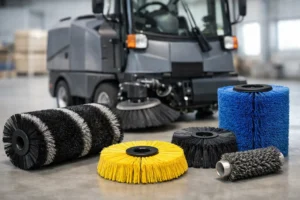
When buyers think about brushes for fabrics and clothes, they often focus on the bristles first. That is understandable, but brush construction is just as important. A roller brush or cylindrical brush is often the right choice for continuous contact across a moving width of material. It can be designed for cleaning, guiding, or controlled surface interaction, depending on density and filament type.
Strip brushes are frequently used where sealing, edge control, dust reduction, or light contact is needed around equipment. They are common in machinery where fabric passes through openings and protection from debris or light contamination matters. They can also help reduce unwanted air movement or dust migration in textile production areas.
Brush panels and brush tables become relevant where material support and surface protection are required. In equipment handling sheet-like or flexible materials, a brush-supported surface can help reduce scratching, marking, and drag. While these systems are often discussed in metal fabrication, the same design logic applies to certain textile and coated-fabric handling environments where controlled support matters.
How soft is too soft, and how stiff is too stiff?
This is where practical testing and application knowledge make a real difference. A brush that is too soft may fail to remove lint, fail to guide material consistently, or collapse under operating pressure. A brush that is too stiff may leave marks, disturb surface finish, distort lighter fabrics, or increase wear on both the material and the machine.
Density also changes performance. A dense fill can create a more uniform contact surface, but it may trap debris or generate more resistance. A lower-density brush may run cooler and release material more easily, but it might not deliver enough contact for cleaning or control. Trim length affects flexibility in the same way. Longer filaments generally flex more. Shorter filaments typically act more aggressively.
For buyers in production settings, this is why sample-based decision making or application review is often worth the time. Replacing a worn brush with a visually similar one is not always enough if the original brush contributed to quality issues or short service intervals.
Common problems caused by the wrong brush
In fabric and garment operations, brush issues usually appear as production symptoms rather than obvious component failures. You might see inconsistent cleaning, lint left behind on finished goods, edge wandering, fabric marking, excess static, or faster-than-expected brush wear. Operators may compensate by changing machine settings, adding cleaning cycles, or increasing manual handling.
Those workarounds usually cost more than the brush itself. They reduce throughput, increase labor, and make quality less predictable. In some plants, a poorly matched brush also leads to unnecessary replacement cycles because the brush was never designed for the actual speed, pressure, or environmental conditions.
This is where a custom-engineered industrial brush solution makes sense. If the application is specific, the machine dimensions are fixed, and the material being processed is sensitive, a made-to-spec brush can produce better consistency than a generic replacement.
What to provide when requesting a custom brush
For custom brushes for fabrics and clothes, clear application data speeds up quoting and improves fit. The most useful starting point includes machine type, brush dimensions, mounting style, operating speed, material being processed, temperature or moisture conditions, and the exact function of the brush.
It also helps to describe the problem you are trying to solve. If the current brush is leaving marks, wearing too quickly, failing to control dust, or not cleaning effectively, that information guides material and design changes. Photos, drawings, and samples are often helpful because small dimensional details can affect compatibility.
An experienced manufacturer will review more than nominal size. They should look at filament behavior, core construction, wear expectations, and how the brush interacts with the surrounding equipment. That design-first approach is especially important for OEMs and maintenance teams that need replacement and custom brush solutions for production equipment without repeated trial and error.
When standard brushes are enough and when custom is better
Standard brushes can be the right choice when the application is straightforward, the machine is common, and the operating conditions are stable. They are often suitable for routine cleaning or basic sealing tasks where exact surface interaction is not highly sensitive.
Custom is usually the better path when fabric protection, machine fit, or process consistency is critical. That includes textile lines with unusual widths, high speeds, specialty materials, dust-sensitive environments, or recurring wear problems. For U.S. manufacturers in states such as Texas, Illinois, Ohio, and Michigan, fast access to replacement and custom brush solutions can directly reduce downtime on equipment that cannot sit idle waiting for an imperfect substitute.
Cepillos Regios manufactures custom-engineered industrial brush solutions designed for durability, fit, and performance across demanding industrial applications, including textile and material-handling environments.
FAQs about brushes for fabrics and clothes
What is the best filament for fabric-contact brushes?
There is no single best option. Nylon is often a strong starting point because it balances flexibility and wear resistance, but the right choice depends on the fabric, speed, pressure, and cleaning or handling objective.
Can a brush damage finished garments?
Yes. If filament stiffness, density, or contact pressure is wrong, a brush can mark, fuzz, distort, or contaminate garments. Sensitive materials need a brush designed around the actual textile and operating conditions.
How often should industrial fabric brushes be replaced?
Replacement intervals vary widely. Wear depends on hours of operation, contact pressure, debris level, speed, and filament material. If you see inconsistent results, visible wear, or quality issues, the brush should be inspected.
Is a custom brush worth it for textile equipment?
If the wrong brush is creating downtime, fabric defects, or repeated replacements, custom is usually worth the investment. A better fit often lowers total operating cost even if the upfront part cost is higher.
Choosing the right brush is really about protecting process stability. When the brush matches the fabric, the machine, and the task, it becomes one less variable for your production team to manage.