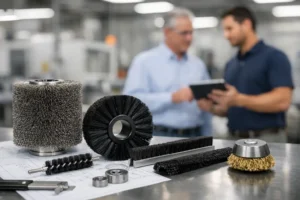

A scratched stainless sheet coming off a punch press is rarely caused by one big failure. More often, it starts with worn brush inserts, the wrong filament stiffness, uneven panel height, or a replacement part that technically fits the machine but does not match the work. That is why specifying the right brush table for sheet metal matters more than many buyers expect.
In CNC punching, laser support, and general sheet handling, the brush table is not just a sacrificial surface. It supports material flow, protects finished faces, helps maintain part quality, and reduces contact damage while sheets move across the machine bed. When the table is matched correctly to the machine and the application, it can reduce marking, support smoother feeding, and simplify maintenance planning. When it is not, operators see drag, inconsistent support, premature wear, and more frequent part rejects.
What a brush table for sheet metal actually does
A brush table for sheet metal is designed to support sheets while minimizing metal-to-metal contact. Instead of a hard support surface, the workpiece rides on brush filaments or brush-supported panels that cushion contact points and reduce scratching. This is especially important for pre-painted material, polished stainless, aluminum, galvanized sheet, and any surface where cosmetic quality matters.
The function sounds simple, but the design variables are not. Brush density, filament diameter, trim height, panel layout, base construction, and mounting method all affect how the table performs under load. A table built for thin decorative sheet may not hold up in a high-throughput fabrication environment processing heavier gauge steel. On the other hand, an overly stiff setup can create more friction and wear than expected, especially on sensitive finishes.
For many shops, the right answer is not a generic replacement. It is a custom-engineered industrial brush solution based on machine dimensions, sheet size, material type, and production conditions.
Why machine compatibility matters more than catalog matching
A common sourcing mistake is treating brush tables as interchangeable across similar machine platforms. Two machines may appear close in bed layout, but panel geometry, mounting locations, and operating clearances can differ enough to affect fit and performance.
That matters in punch presses from manufacturers such as Amada, TRUMPF, Salvagnini, Prima Power, Murata, Finn-Power, LVD, and Strippit. Even within one brand, model variations and aftermarket modifications can change what is required. A replacement panel that is a few millimeters off in height or fastening position can create uneven support zones, sheet instability, or accelerated wear at high-contact areas.
For U.S. manufacturers, especially those running multiple shifts in Texas, Illinois, Ohio, or Michigan, downtime caused by incorrect replacement parts is more expensive than the part itself. That is why buyers should start with actual machine measurements, panel dimensions, hole patterns, and the operating process, not just the machine nameplate.
Material selection in a brush table for sheet metal
The brush filament is where performance is won or lost. Different filament materials change the balance between surface protection, load support, heat resistance, and wear life.
Nylon is widely used because it offers good flexibility, abrasion resistance, and general-purpose durability. For many sheet metal applications, it provides a reliable balance between part protection and service life. Polypropylene can be a better fit where chemical exposure or moisture is present, though it may not deliver the same wear profile in every dry, abrasive environment.
If the application involves higher temperatures, burr contact, or aggressive wear conditions, more specialized materials may be needed. Filament diameter also matters. Finer filaments can be gentler on sensitive surfaces, but they may lay over more quickly under heavier sheets. Thicker filaments provide more support, but if they are too rigid for the finish being processed, they can increase friction and leave visible tracking.
This is one of those areas where it depends on the work mix. A shop running polished aluminum blanks has different needs than one processing hot-rolled carbon steel. The right brush table is designed for durability, fit, and performance in the actual production environment, not in a generic test case.
Panel design, density, and wear patterns
Brush table performance is also shaped by how the panels are built. Panel size, insert pattern, brush density, and support spacing all influence sheet movement and wear distribution.
Higher density brush zones can improve support for thinner sheets and smaller parts, but they may also increase drag if the machine setup or sheet finish is sensitive. Lower density arrangements may reduce resistance, but if support is too sparse, parts can tip, chatter, or mark around concentrated load points.
Wear is rarely uniform across the full table. Entry zones, common nesting areas, and sheet travel paths often wear faster than the rest of the bed. That is why modular brush panel systems are useful in production environments. Instead of replacing the entire table, maintenance teams can change the highest-wear sections first and keep the machine in service with less interruption.
A well-designed replacement program considers both performance and maintenance practicality. That includes standardizing replaceable sections where possible and identifying whether wear is caused by normal production, poor sheet handling, incorrect brush height, or misalignment in the machine.
When to replace brush table panels
Most plants wait too long. By the time the brushes are visibly flattened across large areas, part quality has often been drifting for weeks.
The first signs are usually cosmetic or operational. Operators may notice more scratches on finished sheets, inconsistent sliding, snagging during movement, or uneven support on thin stock. Maintenance may see localized collapse, melted or abraded filament tips, broken brush clusters, or panel edges that no longer sit level with adjacent sections.
Replacement timing depends on sheet type, throughput, machine speed, and how abrasive the process is. A high-volume shop running coated sheet daily will wear the table differently than a lower-volume facility with mixed materials. The best approach is to inspect brush height and wear zones on a set schedule rather than waiting for quality complaints.
What buyers should provide when requesting a quote
A fast quote usually depends on complete information. For replacement and custom brush solutions for production equipment, the more specific the input, the more accurate the recommendation.
At minimum, buyers should provide the machine make and model, panel dimensions, mounting details, overall table layout, and photos of the existing setup. It also helps to include the sheet materials being processed, thickness range, surface sensitivity, and any current issue such as scratching, short wear life, or feeding resistance.
If the original part is unavailable or the machine has been modified, measured drawings or a physical sample can be especially valuable. For OEMs and machinery builders, expected duty cycle and operating conditions should also be part of the conversation. Brush tables manufactured for demanding industrial applications need to be matched to the real process, not guessed from a partial description.
Custom versus standard brush tables
Standard panels make sense when the machine is common, the application is straightforward, and the replacement part has already proven itself in production. They can simplify purchasing and speed up maintenance cycles.
Custom manufacturing becomes the better option when the machine has nonstandard dimensions, the material being processed is surface-sensitive, or the current setup is causing repeat problems. It is also the right path when a plant wants longer wear life, better part protection, or a panel configuration tailored to specific production patterns.
This is where an experienced manufacturer adds value as a technical partner. The goal is not only to supply a part that fits, but to build a brush table around machine compatibility, operating conditions, and maintenance realities. Cepillos Regios works in that design-first way, using machine measurements and application details to deliver custom-engineered industrial brush solutions for U.S. manufacturers and industrial operators.
Common questions about brush tables for sheet metal
Are all brush table panels interchangeable?
No. Even when machines are in the same family, panel dimensions, hole patterns, trim height, and base design can differ. Always verify dimensions and mounting details before ordering.
What causes sheet marking on a brush table?
The most common causes are worn brush filaments, the wrong filament stiffness, debris trapped in the brushes, uneven panel height, or a mismatch between brush design and the sheet finish.
Can a custom brush table improve wear life?
Often, yes. Better material selection, correct density, and a layout matched to traffic patterns can extend service life. The trade-off is that custom parts require accurate application data up front.
Is softer filament always better for finished sheet?
Not necessarily. Softer filaments can protect surfaces, but if they collapse too quickly under load, support quality drops and new marking issues can appear. Surface protection and structural support need to be balanced.
For buyers responsible for uptime, part quality, and replacement sourcing, a brush table should be treated like a working machine component, not a generic consumable. When the table is specified correctly, it helps protect finished material, reduce avoidable rejects, and keep sheet metal production moving with fewer interruptions. If you are replacing worn panels or planning a new setup, request a custom quote based on your machine, dimensions, material, and application.