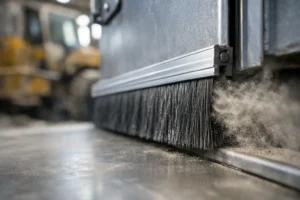

A sweeper that leaves fine dust behind, scatters debris at the curb line, or burns through brush sets too quickly usually has a brush selection problem, not just a machine problem. Choosing the right brushes for industrial sweepers affects pickup efficiency, surface wear, operator satisfaction, and maintenance cost. In production yards, warehouses, foundries, logistics facilities, and municipal service environments, the wrong brush can create more passes, more downtime, and more replacement expense than most teams expect.
For buyers and maintenance teams, the question is rarely just whether a brush fits the machine. The real question is whether the brush is matched to the debris type, the floor or pavement condition, the sweep pattern, and the operating schedule. That is where brush performance is won or lost.
What brushes for industrial sweepers actually need to do
Industrial sweeper brushes do more than move visible debris. They need to control fine dust, carry heavier material into the pickup path, maintain contact across uneven surfaces, and hold their shape under continuous use. A brush that performs well in a distribution center may fail quickly in a steel facility yard. A setup that works for dry paper dust may struggle with compacted grit, metal fines, or wet residue.
This is why material choice and brush construction matter so much. Brushes manufactured for demanding industrial applications need to balance stiffness, recovery, wear resistance, and compatibility with the machine’s speed and pressure settings. If the bristles are too soft, pickup suffers. If they are too aggressive, they can wear prematurely or mark the surface.
Main brush types used on industrial sweepers
Most industrial sweepers use a combination of main brooms and side brushes. The main broom is responsible for moving debris toward the hopper or vacuum path. Side brushes extend the cleaning width and pull debris away from edges, corners, and curbs into the center sweep path.
Within those categories, construction can vary. Cylindrical brushes are common where consistent sweeping action is required across flat surfaces. Wafer and strip configurations are often used in road and outdoor sweeping applications, where replacement speed and mixed filament options matter. Side brushes are typically built to handle edge work and can be configured for more aggressive sweeping or finer dust control depending on the environment.
For many buyers, the mistake is assuming that the original brush style is automatically the best long-term option. In practice, replacement and custom brush solutions for production equipment often improve performance when they are adjusted for actual site conditions rather than catalog defaults.
Bristle materials and why they matter
The most common reason a sweeper brush underperforms is that the filament material does not match the application. Polypropylene is widely used because it resists moisture, many chemicals, and general wear. It is often a solid choice for indoor floors, general debris, and mixed-use industrial settings.
Steel wire or mixed poly-wire configurations are more aggressive and are often selected for compacted dirt, heavy outdoor debris, and rougher surfaces. The trade-off is straightforward. They can improve cutting action and removal of stubborn material, but they may also increase surface wear and are not ideal for every floor type.
Nylon offers good wear characteristics and recovery, making it useful in applications where brush consistency matters over long operating cycles. Natural fibers are less common in heavy industrial sweeping but can still be relevant in specialized environments where heat or finish sensitivity affects material choice.
There is no universal best option. In a food-related exterior area, chemical exposure and washdown may push the decision in one direction. In a metal fabrication yard, abrasive debris may require a more durable and aggressive fill. For warehouse floors in Illinois, Ohio, or Texas facilities with long daily sweep cycles, the goal is often a balance between brush life and reliable fine-dust pickup.
Surface conditions change the right answer
Smooth sealed concrete, rough asphalt, pavers, unfinished slabs, and damaged pavement do not interact with brushes the same way. A brush that performs well on smooth indoor concrete may wear much faster outdoors on coarse pavement. On rougher surfaces, filament diameter, trim length, and brush density become more important because excessive flex can reduce sweeping force while increasing fatigue.
Operators also need to consider surface sensitivity. If the area includes coated floors, decorative concrete, or zones where excessive abrasion is a problem, a softer or more controlled brush setup may be the better choice. If the surface is uneven and debris is heavier, a more aggressive brush may be justified.
This is where custom-engineered industrial brush solutions make a practical difference. When a brush is designed for durability, fit, and performance based on the actual site conditions, buyers can reduce trial and error and get closer to a stable maintenance interval.
Fit, balance, and machine compatibility
Even a high-quality brush will underperform if the dimensions are off or the core and mounting pattern do not match the machine correctly. Brush diameter, face width, arbor size, wafer dimensions, block pattern, and filament layout all affect sweep quality and wear.
A brush that is slightly mismatched can create uneven contact, vibration, poor edge cleaning, and faster wear on one section of the brush. Over time, that also affects bearings, motor load, and operator adjustments. For OEMs and plant maintenance teams, machine compatibility is not a small detail. It is central to service life and cleaning consistency.
When requesting a quote for brushes for industrial sweepers, the most useful information usually includes machine make and model, current brush dimensions, filament type if known, debris being collected, floor or pavement type, and average operating hours. Photos of the worn brush and mounting method can also help identify whether the issue is material selection, fit, or operating setup.
When to replace rather than keep adjusting
Many teams try to extend brush life by adjusting down-pressure or changing operator habits. That can help, but only to a point. Once the filament has worn below its effective working length, lost stiffness, or developed an uneven pattern, performance drops quickly.
Typical signs that replacement is due include streaking, poor edge pickup, visible uneven wear, increased passes required to clean an area, or rising dust left behind after sweeping. If operators are compensating by slowing down, making repeat passes, or over-adjusting brush contact, the real cost of delay is already showing up in labor and machine time.
A good replacement interval should be based on application hours and performance trends, not only on waiting until the brush is fully consumed. In demanding environments, that approach usually lowers total operating cost.
Custom vs. standard sweeper brushes
Standard replacement brushes are often the right answer when the operating environment is stable and the OEM specification already fits the application. They simplify sourcing and can work well for fleets with consistent machines and debris conditions.
Custom manufacturing becomes more valuable when the brush is wearing too fast, debris has changed, sweep quality is inconsistent, or the machine is operating in an environment the original design did not fully account for. That includes facilities handling abrasive fines, mixed debris, moisture exposure, or unusual surface conditions.
A manufacturer that works from machine dimensions and operating conditions can adjust fill material, density, trim, and construction to better match the job. That is especially useful for industrial operators who cannot afford recurring trial orders or production interruptions caused by poor-fit parts.
How a reliable supplier should approach the job
For industrial buyers, a brush supplier should act like a technical manufacturing partner, not just a parts seller. That means asking application questions, confirming dimensions, reviewing wear patterns, and helping the customer decide whether a standard replacement or a made-to-spec brush is the better option.
Cepillos Regios supports solutions for U.S. manufacturers and industrial operators by focusing on exact fit, durable construction, and practical lead times. For buyers managing fleets or facility maintenance across manufacturing-heavy states such as Texas, Michigan, Illinois, and Ohio, responsiveness matters almost as much as product life. A late or incorrect brush shipment can disrupt cleaning schedules, safety standards, and labor planning very quickly.
FAQs about brushes for industrial sweepers
What is the best bristle material for industrial sweeper brushes?
It depends on the debris, surface, and environment. Poly is common for general use, while wire or mixed fill may be better for aggressive outdoor sweeping and compacted debris.
How do I know if I need a custom brush?
If the current brush wears too fast, leaves debris behind, or does not match the real operating conditions, a custom option may improve life and performance.
What details should I provide for a quote?
Provide the machine make and model, brush dimensions, debris type, surface condition, operating hours, and any photos of the current brush or mounting system.
The right sweeper brush is not just a replacement part. It is a wear component that directly affects cleaning quality, maintenance intervals, and equipment uptime. If your current setup is creating extra passes or early wear, it may be time to request a custom quote based on your machine, dimensions, material, and application.