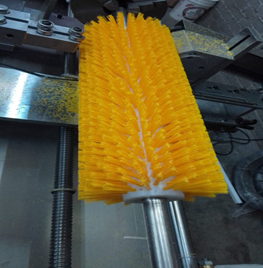

In many industrial processes, cylindrical brushes play a critical role, often without getting much attention until something goes wrong. Choosing the wrong brush type, filament, or size can affect product quality, slow down production, or even cause unnecessary downtime.
In this article, we share real-world manufacturing experience to explain what cylindrical brushes are used for, how they compare to disk brushes, and how to choose the right size and material for your application.
What are cylindrical brushes used for?

Cylindrical brushes are most commonly used in continuous industrial processes, where parts or materials move steadily through a production line. Based on what we see most often with our customers, typical applications include:
- Washing and cleaning metal sheets or metal parts, before or after cutting, stamping, or coating processes
- Continuous surface cleaning, removing dust, light debris, or fine burrs
- Product conveying and guiding, helping keep parts aligned on production lines
- Conveyor belt applications, where the brush works in sync with product movement
- Light deburring, when a controlled, consistent brushing action is required
- Special applications, including support for labeling processes or removing adhesive residue from finished products
The main advantage of cylindrical brushes is their ability to deliver uniform, repeatable contact without stopping or interrupting the process.
Which is better: disk brush or cylindrical brush?
This is a very common question, and the honest answer is: it depends on the job.
From our hands-on experience in industrial environments:
- Disk brushes are typically used for more aggressive or deep cleaning, such as:
- Removing glue or adhesive buildup
- Cleaning sticky or heavily contaminated surfaces
- Applications that require focused scrubbing action
- Cylindrical brushes are better suited for:
- Removing dust and light debris
- Light deburring
- Continuous, gentle cleaning
- Processes where parts move constantly through the line
That said, performance is not determined by brush type alone. Filament material, filament diameter, brush pressure, and operating speed all play a major role in the final result.
Common materials used in cylindrical brushes
The most commonly used materials we manufacture cylindrical brushes with include:
- Nylon (PA)
Nylon is the most popular option in industrial applications. It’s highly recommended because of its memory, meaning the filaments return to their original position after flexing, which helps maintain consistent performance and extends brush life. - Polypropylene
Polypropylene is widely used in wet or high-moisture environments. It offers good chemical resistance and performs well when filament memory is less critical.
Choosing the right material can be the difference between a brush that lasts for months and one that wears out prematurely.
Cylindrical brush sizes: why diameter matters

There is no “one-size-fits-all” when it comes to cylindrical brushes. In most industrial applications, brushes are custom-made to match the process. However, there are some general guidelines worth understanding:
-
Small diameters (2” to 4”)
- Shorter bristles
- Stiffer brushing action
- More aggressive contact with the surface
- Ideal for heavier cleaning or limited space applications
-
Larger diameters (6”, 7”, 8”, 9” or more)
- Longer bristles
- Softer, more flexible contact
- Better for delicate surfaces or continuous cleaning
- Reduce drisk of surface damage
This is why evaluating the entire process, rather than copying a previous brush sizes is critical to achieving consistent results.
Cylindrical Brush FAQ
What are industrial cylindrical brushes used for?
They are used for continuous cleaning, washing metal parts, removing dust or light burrs, guiding products, conveyor belt cleaning, and supporting specialized processes like labeling or adhesive removal.
Which is better for cleaning: disk brush or cylindrical brush?
Disk brushes are better for aggressive or sticky contamination. Cylindrical brushes are better for continuous, uniform cleaning and light deburring. The right choice depends on the application.
What is the best material for cylindrical brushes?
Nylon is the most commonly recommended material due to its durability and filament memory. Polypropylene is a strong option for wet or high-moisture environments.
How do I choose the right cylindrical brush diameter?
Smaller diameters provide more aggressive brushing, while larger diameters offer softer contact. The correct size depends on the surface, pressure, and process requirements.
Should I use a standard or custom cylindrical brush?
In most industrial processes, custom-made cylindrical brushes provide better performance, longer service life, and more consistent results.