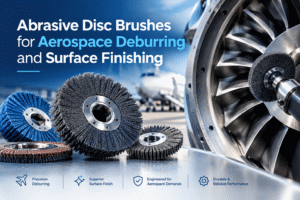

In modern manufacturing, even a small burr can cause serious problems. Deburring is the process of removing rough edges to create smooth and functional surfaces. It improves surface finish and prepares parts for welding, coating, or painting. One of the most effective tools for this task is a deburring brush.
A metal finishing brush is an industrial surface treatment tool made with abrasive nylon or wire filaments. It smooths rough edges and improves surface quality without harming the base material. These brushes can be used manually or integrated into CNC machines and automated production lines.
Using the right brushes improves quality, enhances safety, and ensures consistent precision. It also increases efficiency and reduces production costs in modern manufacturing. However, manufacturers should also understand common deburring mistakes that can reduce efficiency and damage parts. Learning about these issues can help optimize the finishing process.
Why Deburring Is Essential in Manufacturing
Deburring is vital for product performance and workplace safety. Even a tiny burr can disrupt a component’s function. Sharp edges may cause friction, poor alignment, or early wear. In high-precision industries, these small defects can lead to serious mechanical issues. Burrs can also create safety hazards for workers handling the parts.
Understanding the purpose of deburring in industrial manufacturing helps companies recognize why this finishing step is critical for both safety and performance. Ignoring deburring leads to higher costs. Parts may fail inspection or require rework. Production delays, wasted materials, and rejected components reduce profitability. In severe cases, poor finishing can result in product returns or recalls, damaging a company’s reputation.
Proper deburring ensures smooth assembly and accurate fit. It improves surface finish and supports better coating, welding, and bonding results. Customers receive reliable, high-quality products.
Most importantly, efficient deburring increases productivity and reduces scrap rates. It minimizes downtime and improves consistency. In today’s competitive manufacturing environment, deburring is a smart investment that protects both quality and ROI.
Top 5 Industrial Applications of Deburring Brushes
Deburring brushes are widely used across multiple industries. They improve edge quality, enhance safety, and support efficient production. Below are five key industrial applications where they make a measurable impact.
1. Automotive Parts Finishing:
The automotive industry demands tight tolerances and consistent performance. Engine components, gears, brackets, and transmission parts often develop burrs during machining. Industrial abrasive brushes remove these sharp edges without altering part dimensions. This improves assembly accuracy and ensures smoother mechanical operation. Clean edges also enhance surface safety for workers and technicians handling the parts.
2. Aerospace & Defense Components:
Aerospace manufacturing requires extreme precision. Even minor edge defects can compromise performance. Precision-machined parts such as turbine components and structural fittings must be completely burr-free. Burr removal brushes provide controlled edge radiusing while maintaining strict tolerances. The result is a consistent surface finish that meets safety-critical standards and regulatory requirements.
3. Sheet Metal & Fabrication:
Sheet metal operations like laser cutting, stamping, and bending naturally create burrs. These sharp edges can delay assembly and interfere with coating processes. Deburring brushes quickly smooth edges and prepare surfaces for welding or painting. This speeds up production and improves overall product quality.
4. Pipe, Tube & Internal Bore Finishing:
Tubing and hydraulic fittings often contain internal burrs after drilling or cutting. These imperfections can restrict fluid flow and weaken connections. Specialized nylon abrasive brushes efficiently clean internal bores. This enhances flow performance, improves sealing, and reduces the risk of leaks in industrial systems.
5. Surface Preparation Before Coating & Painting:
Surface preparation is essential before powder coating, plating, or painting. Burrs and rough edges can prevent proper adhesion. Surface cleaning brushes create a uniform surface texture that supports stronger bonding. This improves appearance, increases corrosion resistance, and extends product lifespan.
How to Choose the Right Burr Removal
Selecting the right burr removal ensures better edge finishing and longer tool life. The wrong choice can reduce efficiency and affect surface quality. Here are the key factors to consider:
Bristle Material:
Choose steel wire brushes for heavy burr removal on hard metals. Select abrasive nylon brushes for controlled deburring, light edge radiusing, and delicate surfaces.
Brush Shape and Size:
Wheel and cup brushes work well for flat surfaces. End and cylindrical brushes are ideal for internal bores and tight spaces. Match the brush diameter to your part dimensions.
Grit Selection:
Coarse grit removes larger burrs quickly. Fine grit provides smoother surface finishing and better coating preparation.
Machine Compatibility:
Ensure the brush matches your CNC machine, robotic system, or manual tool. Always check RPM limits for safe operation.
Production Volume and Part Geometry:
High-volume manufacturing requires durable, long-lasting brushes. Complex shapes may need flexible filament designs for consistent results.
Manufacturers should also evaluate the best deburring techniques used in industrial production to ensure optimal results for different materials and machining processes.
Deburring Brush Benefits
Industrial abrasive brushes bring clear benefits to modern manufacturing operations. They enable companies to improve efficiency while maintaining high production standards.
Faster Throughput Than Manual Tools
Industrial abrasive brushes work quickly and efficiently, especially when integrated into CNC machines or automated systems. They remove burrs in seconds, reducing cycle time and speeding up production. Compared to hand filing or grinding, they offer much faster and more consistent results.
Lower Labor Costs and Fewer Errors
Manual deburring requires time, skill, and constant supervision. Automated or machine-mounted burr removal brushes reduce operator dependency. This lowers labor costs and minimizes human error, helping maintain steady production flow.
Consistent and Repeatable Edge Quality
Wire deburring brushes provide uniform edge finishing across every part. They maintain tight tolerances and prevent over-cutting. This consistency improves inspection pass rates and overall product quality.
Safer Handling and Greater Reliability
Smooth, burr-free edges reduce injury risks during assembly and transport. Clean edges also improve part performance, durability, and long-term reliability.
Conclusion
Burr removal brushes are essential tools in modern manufacturing. They remove sharp edges, improve surface finish, and protect product quality. By ensuring smooth assembly and precise tolerances, they help manufacturers reduce rework, increase efficiency, and maintain safety standards.
From automotive parts to aerospace components, deburring brushes support consistent and reliable production. They lower labor costs, improve throughput, and enhance overall product performance. In a competitive market, clean edges and flawless finishes are not optional. They are expected.
If you want better results and higher productivity, choosing the right deburring solution matters. Find the right brushes for your process. Request custom brush sizing for your specific application.
Contact our application experts to optimize your finishing operation today.
FAQs
Q1. What is the best brush type for metal deburring?
The best brush depends on the material and burr size. Wire brushes are ideal for heavy burr removal on hard metals. Abrasive nylon brushes work better for controlled edge finishing and precision parts.
Q2. Can deburring brushes be used on plastic or composites?
Yes. Abrasive nylon brushes are suitable for plastics and composite materials. They remove light burrs without damaging soft surfaces.
Q3. How often should brushes be replaced?
Brushes should be replaced when filaments are worn, uneven, or no longer provide consistent results. Replacement frequency depends on material type and production volume.
Q4. Are deburring brushes safe for automated systems?
Yes. These brushes are widely used in CNC machines and robotic systems. Always follow recommended RPM limits for safe operation.
Q5. What is the difference between abrasive nylon and wire brushes?
Abrasive nylon offers flexible, controlled finishing. Wire brushes provide more aggressive burr removal for tougher metals.